








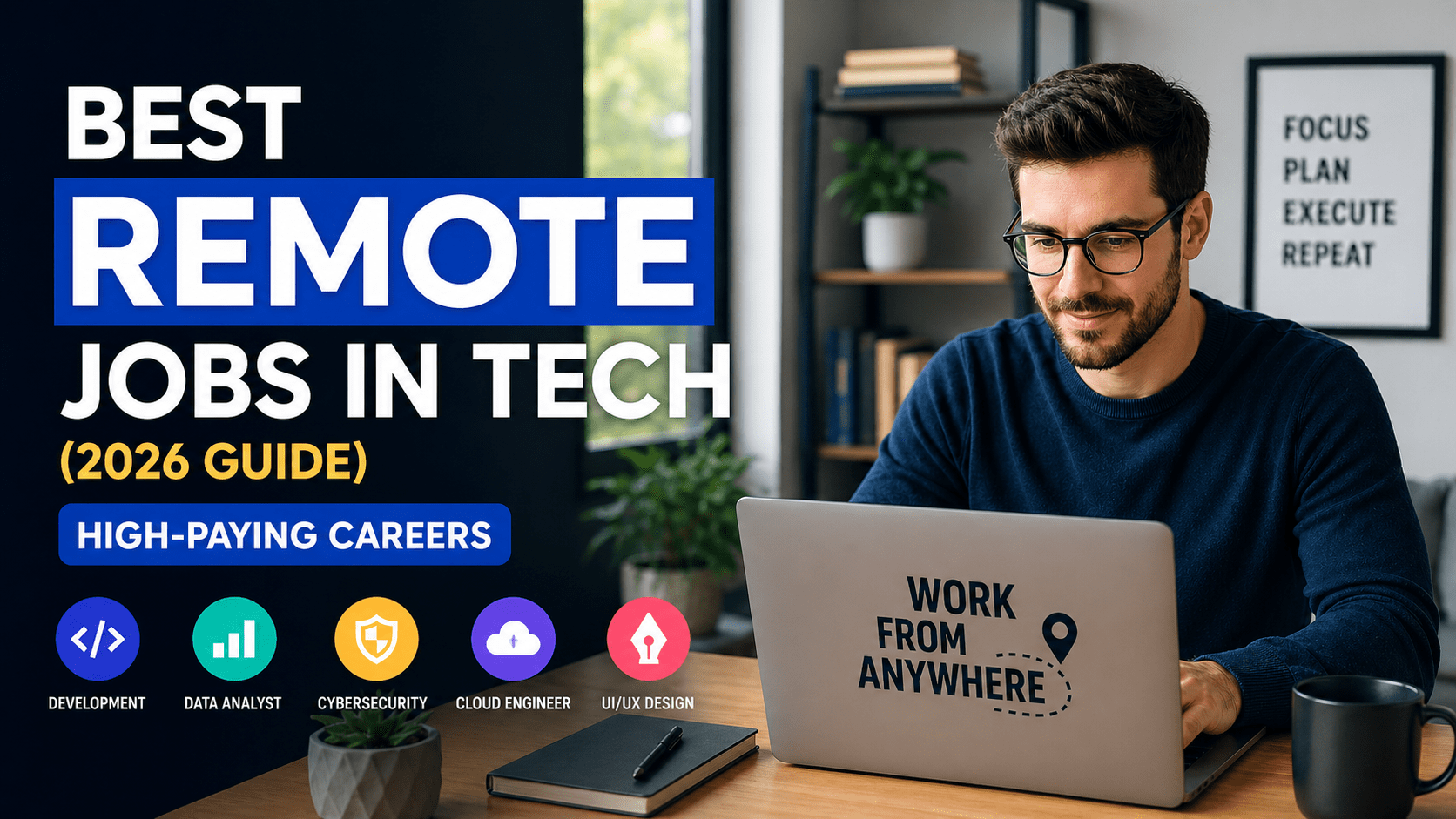
Remote work in USA tech has become one of the fastest ways to build a stable, high-income career without needing a traditional office setup. In 2026, companies are actively hiring skilled professionals from anywhere, focusing more on ability than location. This guide breaks down the best roles, what they involve, and how beginners can start. Whether you want to switch careers or start fresh, remote tech jobs offer flexibility, growth, and long-term demand if you choose the right path and build the right skills early.
Why Remote Tech Jobs Are Growing Fast in 2026
Remote tech jobs are growing rapidly because companies now rely heavily on digital tools and global talent pools. Businesses save costs by hiring remote workers, while employees gain flexibility and better work-life balance. The rise of cloud computing, AI tools, and collaboration platforms has made location less important. For example, many startups now hire developers and analysts across different countries without physical offices. This shift has created more opportunities for skilled professionals, especially in software, data, and cybersecurity fields, where work can be done entirely online.
What Makes a Tech Job Remote-Friendly
A tech job becomes remote-friendly when tasks can be completed using digital systems without needing physical presence. Roles that involve coding, data analysis, cloud management, or digital product design usually fit this model well. Communication tools like Slack, Zoom, and GitHub allow teams to collaborate effectively from anywhere. For example, a software developer can build and test applications entirely online without visiting an office. The key factor is whether the work depends on digital output rather than physical interaction, making it suitable for remote environments.
Best Remote Jobs in Tech (With Salary & Skills)
Remote Software Engineer
Remote software engineers build applications, websites, and systems used by millions of users. They work with programming languages like Python, JavaScript, or Java to develop scalable solutions. Strong problem-solving skills are essential, along with understanding databases and APIs. Salaries are typically high due to strong demand. Many companies hire junior developers remotely if they can show solid project experience. For example, building a small web app or contributing to open-source projects can help beginners get noticed by employers.
Remote Data Analyst
Data analysts help companies make decisions by interpreting raw data into useful insights. They often use tools like Excel, SQL, and Python to analyze trends and performance metrics. This role is ideal for beginners who enjoy problem-solving and numbers. Many entry-level positions are available remotely because data work is fully digital. For instance, an analyst might track website traffic or sales patterns to improve business strategy. Strong attention to detail and logical thinking are key to succeeding in this role.
Remote Cybersecurity Specialist
Cybersecurity specialists protect systems and networks from digital threats and attacks. As cyber risks increase, companies are investing heavily in remote security experts. This role involves monitoring systems, identifying vulnerabilities, and responding to breaches. Certifications like CompTIA Security+ or CEH can help beginners enter the field. Even small companies now hire remote security professionals to protect customer data. It is a high-demand career with strong long-term stability, especially as online threats continue to grow globally.
Remote Cloud Engineer
Cloud engineers manage and maintain cloud infrastructure using platforms like AWS, Microsoft Azure, or Google Cloud. Their job ensures that applications run smoothly and securely online. This role requires understanding servers, networking, and deployment systems. Companies prefer remote cloud engineers because infrastructure can be managed digitally from anywhere. For example, an engineer might deploy a website or fix server issues without being physically present in a data center. It is one of the highest-paying remote tech roles today.
Remote AI / Machine Learning Engineer
AI and machine learning engineers build intelligent systems that can learn from data and make predictions. They work with Python, algorithms, and data modeling techniques. This field is growing fast due to increased demand for automation and smart applications. Many roles are remote because training models and analyzing data can be done online. For example, AI engineers may develop recommendation systems for apps or predictive tools for businesses. It is a highly technical field but offers excellent future opportunities.
Remote Product Manager
Remote product managers guide the development of digital products by coordinating between teams like design, engineering, and marketing. They don’t usually code but need strong communication and planning skills. Their main focus is ensuring the product meets user needs and business goals. This role is well-suited for remote work because coordination happens through digital tools and meetings. For example, a product manager might oversee the launch of a mobile app while working with a global team across different time zones.
Remote Web Developer
Remote web developers create and maintain websites for businesses and individuals. They work with HTML, CSS, JavaScript, and sometimes backend technologies. This is one of the most beginner-friendly tech careers because skills can be learned through online courses and practice. Many freelancers start with small website projects to build experience. For instance, creating a portfolio website or a simple business landing page can help land first clients or jobs. Demand for web developers remains strong in remote markets.
Best Remote Tech Jobs for Beginners
Beginners can start with roles that require simpler technical foundations, such as web development, data entry analysis, or junior support engineering. These jobs often focus more on learning ability than deep experience. For example, a beginner web developer can start with HTML and CSS projects before moving to JavaScript. Many companies also offer training for entry-level remote roles. The key is to start small, build real projects, and gradually improve skills instead of waiting for perfect expertise.
High-Paying Remote Tech Jobs Without a Degree
Many remote tech careers no longer require formal degrees because companies focus more on skills and practical experience. Roles like web development, data analysis, and QA testing can be entered through self-learning and certifications. For example, a developer with a strong GitHub portfolio can get hired even without a computer science degree. Employers care more about what you can build than your academic background. This makes tech one of the most accessible industries for remote career growth today.
Skills You Need to Get a Remote Tech Job
To succeed in remote tech jobs, you need both technical and soft skills. Technical skills include coding, data handling, or cloud platforms depending on your role. Soft skills like communication, time management, and problem-solving are equally important in remote settings. Tools like GitHub, Slack, and Zoom are commonly used for collaboration. For example, a remote developer must not only write clean code but also explain progress clearly to teammates across different time zones.
Step-by-Step: How to Start a Remote Tech Career
Start by choosing one clear career path instead of trying everything at once. Then focus on learning the required skills through online courses or tutorials. Next, build real projects to create a strong portfolio that shows your ability. After that, start applying for internships, freelance gigs, or entry-level remote jobs. For example, a beginner web developer can create a personal website and small client projects before applying to remote companies. Consistency matters more than speed in this journey.
Where to Find Legit Remote Tech Jobs
Legit remote tech jobs can be found on trusted job boards, company career pages, and freelance platforms. Websites dedicated to remote work often list verified opportunities from global companies. You can also check startup hiring pages or LinkedIn job listings. For example, many tech startups post remote developer roles directly on their websites. Always verify job listings to avoid scams and focus on companies with clear hiring processes and established reputations.
Tips to Get Hired for Remote Tech Jobs Faster
To get hired faster, focus on building a strong portfolio that shows real work instead of just certificates. Tailor your resume for each role and highlight relevant skills clearly. Networking also plays a big role—connecting with professionals on LinkedIn can open hidden opportunities. For example, sharing your projects publicly can attract recruiters. Consistent learning and applying regularly increase your chances significantly in competitive remote job markets.
Common Mistakes to Avoid
Many beginners make the mistake of learning too many skills at once without mastering any single one. Others focus only on theory without building real projects. Applying for jobs without preparation or a portfolio is another common issue. For example, someone learning programming for months but never building an app will struggle to get hired. The key is focused learning, practical experience, and consistent improvement instead of rushing the process.
Future Trends in Remote Tech Jobs
The future of remote tech jobs is closely tied to AI, automation, and global digital transformation. More companies are shifting to hybrid or fully remote models. Skills in AI, cloud computing, and cybersecurity will continue to grow in demand. For example, AI tools are already changing how developers write code and how analysts process data. Remote work is not just a trend—it is becoming the standard for many technology-driven industries worldwide.
FAQs
Can I get a remote tech job with no experience?
Yes, many entry-level remote tech jobs are available for beginners who have built basic skills and small projects. Employers often value practical ability more than formal experience. For example, a beginner web developer can start with freelance projects to build confidence before applying for full-time roles.
Which remote tech job pays the most?
Roles like cloud engineering, AI engineering, and cybersecurity generally offer the highest salaries. These positions require advanced technical skills but are in high demand globally. Companies are willing to pay more for experts who can manage complex systems and protect digital infrastructure.
Do I need a degree for remote tech jobs?
No, many companies now prioritize skills over degrees. If you can demonstrate your ability through projects, certifications, or freelance work, you can still get hired. For example, many successful developers are self-taught.
How long does it take to get hired?
It depends on your learning speed and consistency. On average, beginners may take 3–6 months of focused learning and project building before applying successfully. The more practical experience you gain, the faster you can land a role.